Backyard Gardening Digital Papers: A Designer's Earthy Toolkit
Cultivating a Cohesive Visual Language
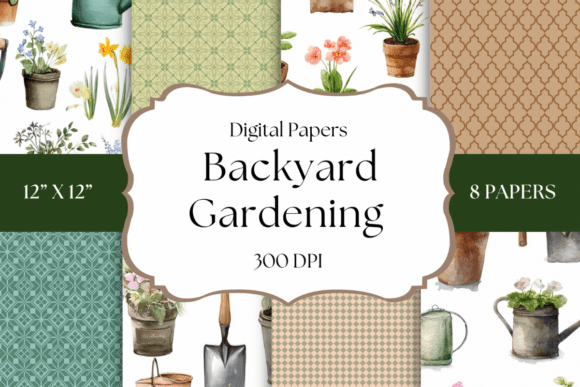
There’s a particular warmth to a well-loved garden—the rust on a trowel, the patina on a clay pot, the soft blur of watercolor petals. Capturing that feeling in design work can be tricky. Stock photos often feel sterile, and generic patterns lack personality. This is where the Backyard Gardening digital paper collection finds its niche. It’s not just a set of patterns; it’s a curated mood board in JPEG format. The eight 12x12, 300 DPI files deliver a distinct visual personality: soft earthy tones of sage, clay, and blush, combined with hand-illustrated motifs of shovels, watering cans, and vintage-style floral arrangements. The watercolor texture gives everything an organic, imperfect quality that feels authentic and inviting. This isn’t the hyper-clean aesthetic of modern tech; it’s the textured, layered look of artisanal craft and thoughtful outdoor living.
Where These Textures Take Root: Practical Applications
The real value of a creative asset like Backyard Gardening is its versatility across projects and mediums. For the scrapbooker or junk journal enthusiast, these papers provide instant, cohesive backgrounds that set a nostalgic, hands-on tone. But their use extends far beyond personal crafting. Consider these practical applications:
- Brand & Packaging Design: For a local nursery, a boutique seed company, or a handmade soap brand, these textures can form the foundation of a brand identity. Use a subtle pattern as a website background, or a more detailed paper as the wrap for product packaging. The earthy palette conveys natural ingredients, care, and small-batch quality.
- Editorial & Digital Publishing: Bloggers and content creators in the gardening, home decor, or slow-living spaces can use these as backgrounds for quote graphics, Pinterest pins, or article headers. They add depth and context without overwhelming the typography. A sage-toned paper with a faint shovel pattern behind a serif headline instantly communicates the topic.
- Marketing & Social Media: Create cohesive Instagram Stories, Facebook event banners, or printable flyers for a garden club meeting or a farmer's market stall. The consistent style across the set ensures all your materials look professionally designed and thematically unified.
- Print-on-Demand & DIY Projects: Design unique greeting cards, gift tags, seed packet envelopes, or even notebook covers. The high-resolution 300 DPI ensures these assets print cleanly, making them suitable for commercial products you intend to sell.
Integrating Texture with Typography: A Strategic Approach
Pairing a textured, patterned background with type requires a thoughtful strategy to maintain readability and visual hierarchy. The goal is harmony, not competition. Here’s how to approach it effectively:
- Prioritize Contrast: The soft, mid-tone palette of Backyard Gardening is beautiful, but it can swallow low-contrast text. Always test your type against the paper. A crisp white or a deep charcoal will typically stand out best. For a more integrated look, sample a darker earthy tone from the pattern itself—like a deep forest green or a rich brown—for your headline font.
- Choose Complementary Typefaces: The handmade, vintage feel of these papers pairs naturally with certain font styles. A sturdy, classic serif font for body text can ground the design. For headlines, consider a handwritten font or a script font with a natural flow to echo the watercolor aesthetic. Alternatively, a clean sans serif font can provide a modern counterpoint, creating a balanced, "heritage meets contemporary" feel. Avoid overly ornate or futuristic typefaces that would clash with the organic vibe.
- Layer Strategically: Don’t just slap text on top of a busy pattern. Use the papers as a background element and place your text on a semi-transparent shape—a simple rectangle or a soft-edged ellipse—to create a "quiet zone" for your message. This technique is essential for maintaining professionalism in logo design, packaging design, and social media graphics.
- Consider the Project’s Needs: For a gardening planner, readability is paramount. You might use a full-page paper for the cover but switch to a very light, washed-out version of a pattern for internal page backgrounds. For a handmade card, you can afford to use the bolder patterns as a primary design feature.
Evaluating any design asset is about fit. Does the texture support the message or distract from it? For projects centered on nature, growth, sustainability, comfort, and artisanal quality, the Backyard Gardening collection is a strong candidate. It provides a ready-made visual identity that can accelerate your design process, ensuring consistency across all touchpoints of a project or brand. By understanding its personality and applying it with strategic typography, you can transform these digital papers from simple backgrounds into powerful storytelling tools that resonate with your audience.